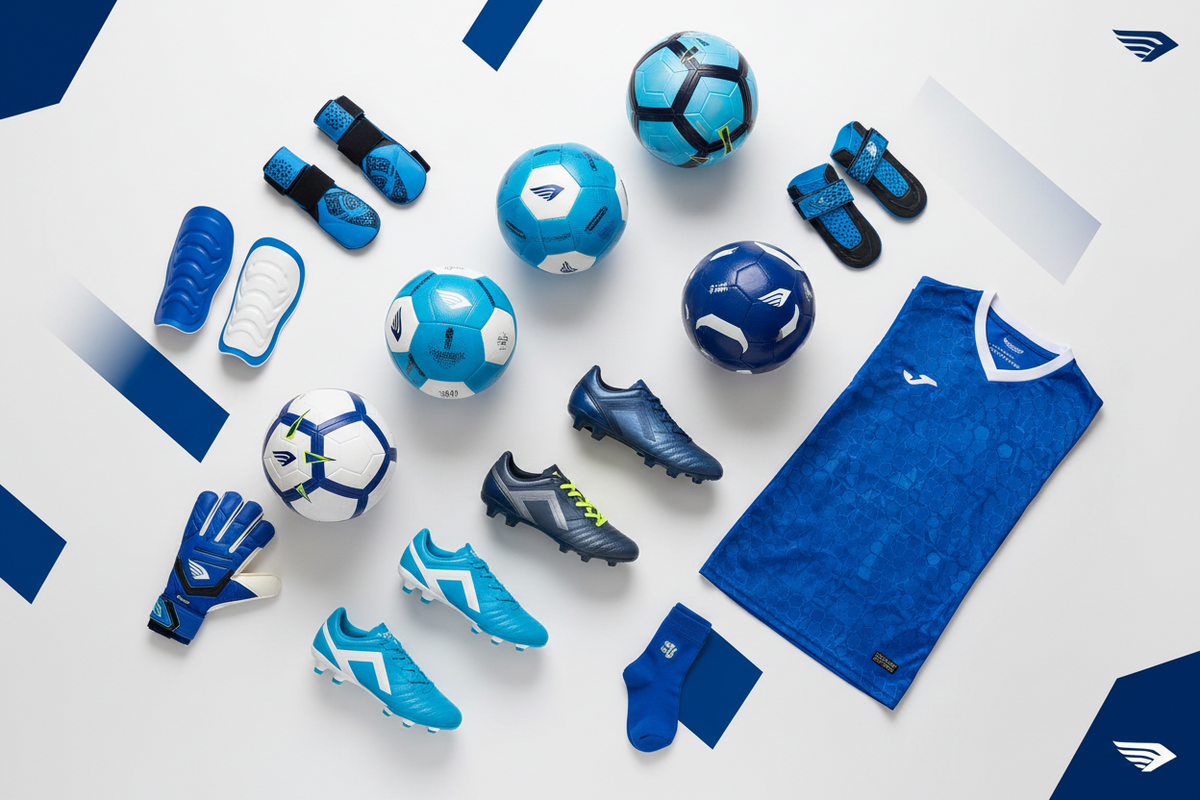
Forming a club is mostly paperwork. Kitting one out is the bit nobody warns you about — not because it is hard, but because there are about twenty small decisions and they all arrive at once, usually in August.
This is the list, roughly in the order you will need it.
1. The match strip
Shirt, shorts, socks. Three things worth settling before you order:
- Check your league's rules first. Most require numbered shirts, a goalkeeper in colours clearly distinct from both outfield teams and both keepers, and some have rules about sponsor placement. Ask your league secretary before you buy, not after.
- Order a couple more than your squad. Players join, shirts get lost, and coming back for two shirts in November is the moment you discover the range has changed.
- Check the range will still be there. Ask us. It costs nothing and it is the single most useful question a new club can ask.
Browse match day shirts · How the four teamwear brands differ
2. Goalkeeper kit
A separate strip in a contrasting colour, plus gloves. Two keepers if you can, because one will be unavailable the week you need them.
3. Training wear
This is what the club will actually buy most of, season after season — training tops, quarter-zips, shorts, tracksuits. It is also the easiest thing to let parents buy themselves rather than funding centrally.
4. Something for the touchline
Rain jackets or benchwear for coaches and subs. Skipping this is a false economy that becomes obvious in the first cold week of the season.
5. Match and training balls
Ball size normally goes by age group — size 3 for the youngest, size 4 through the middle years, size 5 from around U15 and for adults. Your league or county FA will confirm exactly where the cut-offs fall for your age groups.
Buy more training balls than feels sensible. They disappear.
6. The rest of the kit bag
- Bibs — two colours, so you can split a session three ways with the unbibbed group
- Cones and markers — more than you think
- Portable goals if you do not have permanent ones
- A kit bag or holdall that one person can actually carry
- Water bottles and a carrier
- A first aid kit — check what your league requires, and who is responsible for it
- Pump, ball bag, whistle, notebook
7. Your crest, in a usable file
Do this early. Whoever designs your badge should hand you a vector file — .ai, .eps, .pdf or .svg. Get it at the point you commission the design, because tracking down the designer eighteen months later is a genuine and very common problem.
Getting your crest print-ready
8. A way to order that does not go through you
This is the one that decides whether running the club is enjoyable.
The default is that the secretary collects sizes on WhatsApp, collects money in cash at training, places one big order, and personally absorbs every subsequent change. It works exactly once.
Two better options, both free:
- A club shop — your own page with your crest and your approved kit on it. Parents order their own child's size with their own name on it and pay for it themselves. We build and host it at no cost to the club.
- A squad order for anything the club genuinely does buy centrally — paste the team sheet in from a spreadsheet and order every name, number and size in one go.
Paying for it
- 10% comes off automatically over £100, which a first kit order will clear comfortably.
- UK delivery is free over £300.
- If you are funded through a school, council or parish council, you can pay on a purchase order and attach the PO document to the order.
- A sponsor's logo on the shirt is a normal print job — see personalisation prices.
Talk to us first
New clubs are the orders most worth getting right, and a ten-minute conversation usually saves a season of small problems. Tell us the age groups, rough squad numbers and your colours and we will put a list together.
Ask for a quote · Set up a club shop · sales@eastpointsports.net
More news

Personalised Mugs for Your Business, From £4.99 With the Print Included
An 11oz mug with your logo or your own design is £4.99 with the print included, and less by the box. How the mug designer works and what the quantity prices are.

Workwear Packs: Ten or More Garments With the Logo Free
A pack is one line on the order: ten or more of the same garment with your logo printed on every one at no extra charge. How they work and when to use one.

Winter Workwear: How to Layer a Crew for the Cold
One thick coat is the wrong answer. How to build a winter uniform from layers that come on and off through the day, and where the logo goes on each.

Kids' Hi-Vis Vests for Schools, Nurseries and Clubs
A line of children in bright vests is easier to count and easier to see. Vest or tabard, which colour for which group, and how a class set of thirty works.

Portwest Workwear: What the Range Covers and Who It Suits
Portwest is the brand a site crew is most likely to be wearing already. What is in the range, how the trouser families differ, and what can carry your logo.

Regatta Professional: Outdoor Workwear for Crews in the Weather
Regatta's work range brings outdoor-clothing know-how to uniform. The sub-brands explained, what to choose for which job, and where your logo goes.